Open kitchen shelving is one of those design trends that people either absolutely love or completely dread. You’ve probably seen some gorgeous kitchens on Pinterest and Instagram with perfectly styled floating shelves, neat stacks of white dishes, and little potted herbs lined up just right. They can look amazing, but is open shelving actually practical for real life?
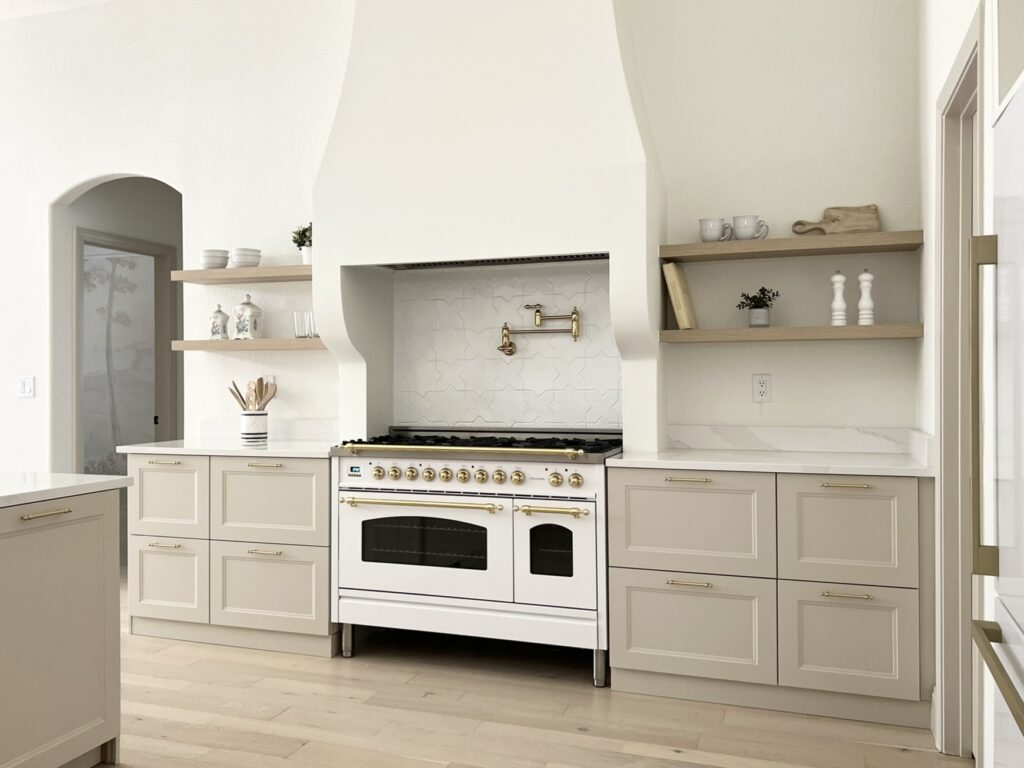
I installed floating shelves in our last home when we remodeled the kitchen. In this post, I’ll share if I would install open shelving again when we decide to remodel our current kitchen!
Let’s break it all down in detail first so you can decide if open shelving is right for your kitchen.
Note: This post may contain affiliate links, you can find more information in my disclosures here.
Why Open Shelving Is So Popular
Open shelving has been trending for the last several years, and it’s not hard to see why. It makes a kitchen feel bigger, brighter, and more personal. Instead of a wall of closed cabinets that can feel heavy and boxy, you get this airy, open feel that instantly changes the space:
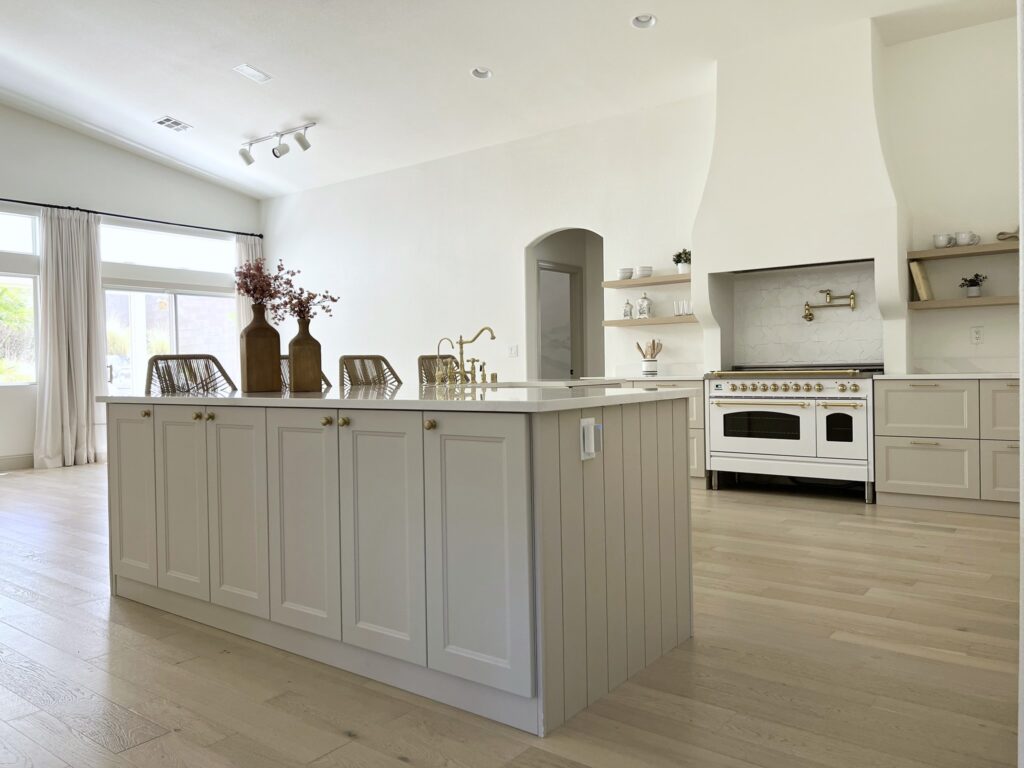
Designers love it because it forces you to be intentional about what you keep on display. It also gives you an opportunity to show off beautiful dishware, cookbooks, and collected or heirloom pieces that tell your story.
The Pros of Open Kitchen Shelving
Let’s talk about the pros and cons of open shelving in kitchens.
I’ll start with the pros, because there’s a lot to love:
- It makes your kitchen feel larger: Removing upper cabinets (or even just a few of them) can open up a kitchen dramatically. This is especially helpful in smaller kitchens where bulky cabinets can make things feel cramped.
- Everything is easy to find and grab: No more digging through cabinets to find that one serving bowl hiding in the back. With open shelves, everything is right there in front of you. It’s genuinely more convenient for everyday items you use all the time.
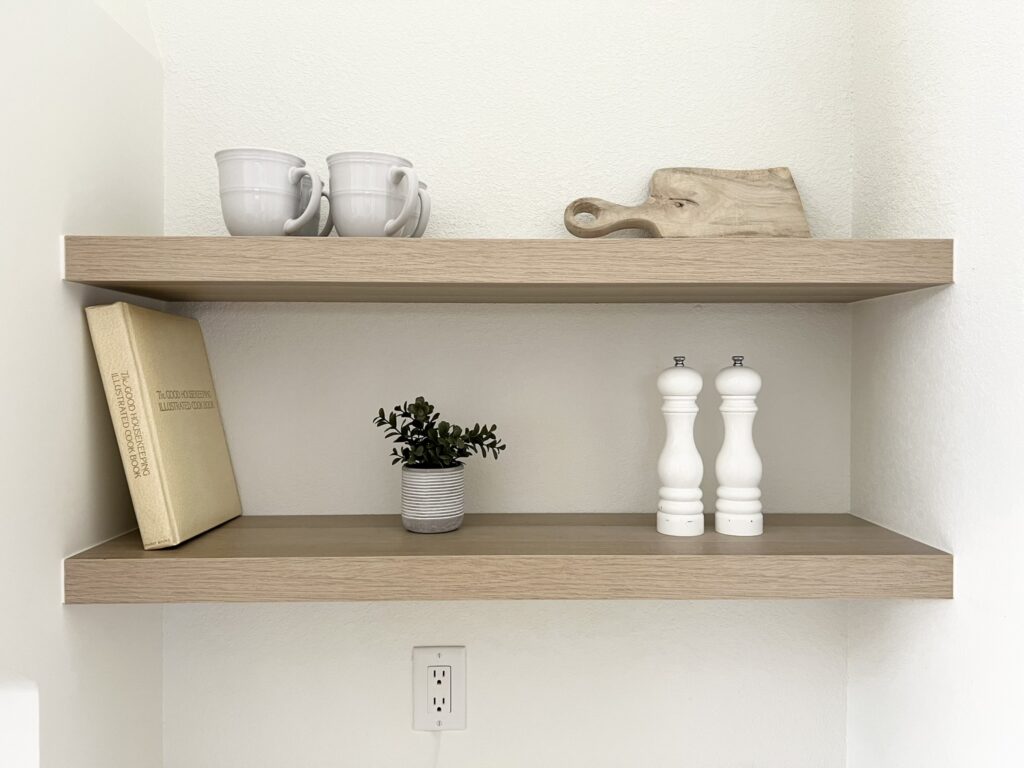
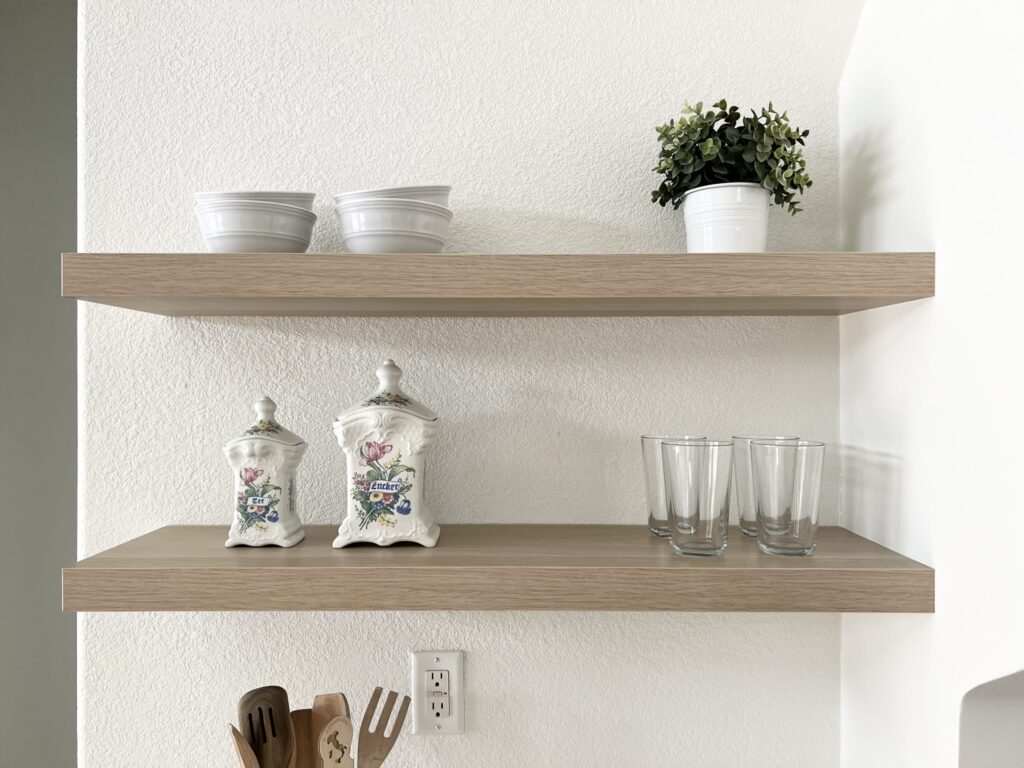
- It’s budget friendly: Open shelves cost significantly less than upper cabinets. A set of quality floating shelves might cost you less than $30 (like the ones I used in our kitchen), whereas replacing upper cabinets can easily cost hundreds or even thousands. If you’re doing a kitchen refresh on a budget, open shelving can be a great option!
- It adds personality: Closed cabinets are functional but they don’t show much character. Open shelving lets you display your favorite mugs, vintage finds, plants, and art.
- It works with almost any style: Whether your kitchen is farmhouse, modern, minimalist, mid-century, or bohemian, open shelving fits right in. The shelf material and what you put on them sets the tone and there are endless options!
The Honest Cons of Open Kitchen Shelving
Now for the stuff that doesn’t always make it into those pretty photos.
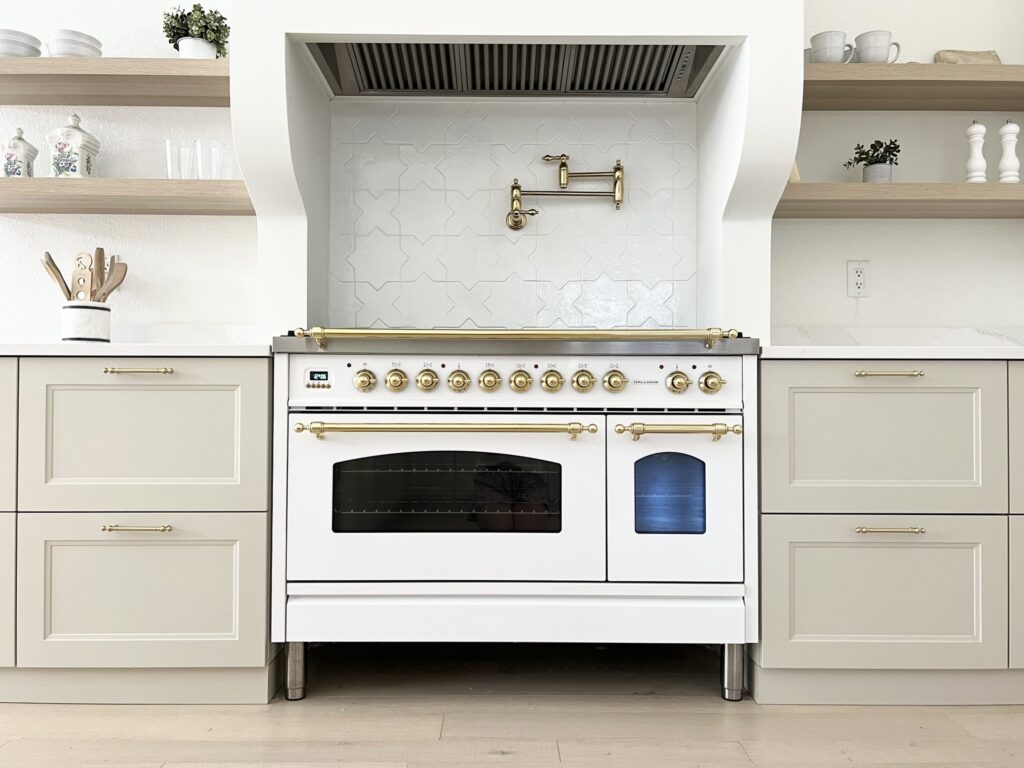
- Dust and grease are real: This is probably the number one complaint. Kitchen shelves that are open collect dust, cooking grease, and grime way faster than you’d expect. If your shelves are near the stove, everything on them will need regular cleaning. I did find that having a powerful range hood (and consistently using it) that also had side walls helped at lot with this! I rarely had to wipe down the shelves in our old kitchen and they were right next to the range:
- You have to keep things tidy: There’s nowhere to hide the mess. If you’re someone who tends to shove things into cabinets and close the door (no judgment, we’ve all been there), open shelving will hold you accountable. Everything on display needs to look at least somewhat organized.
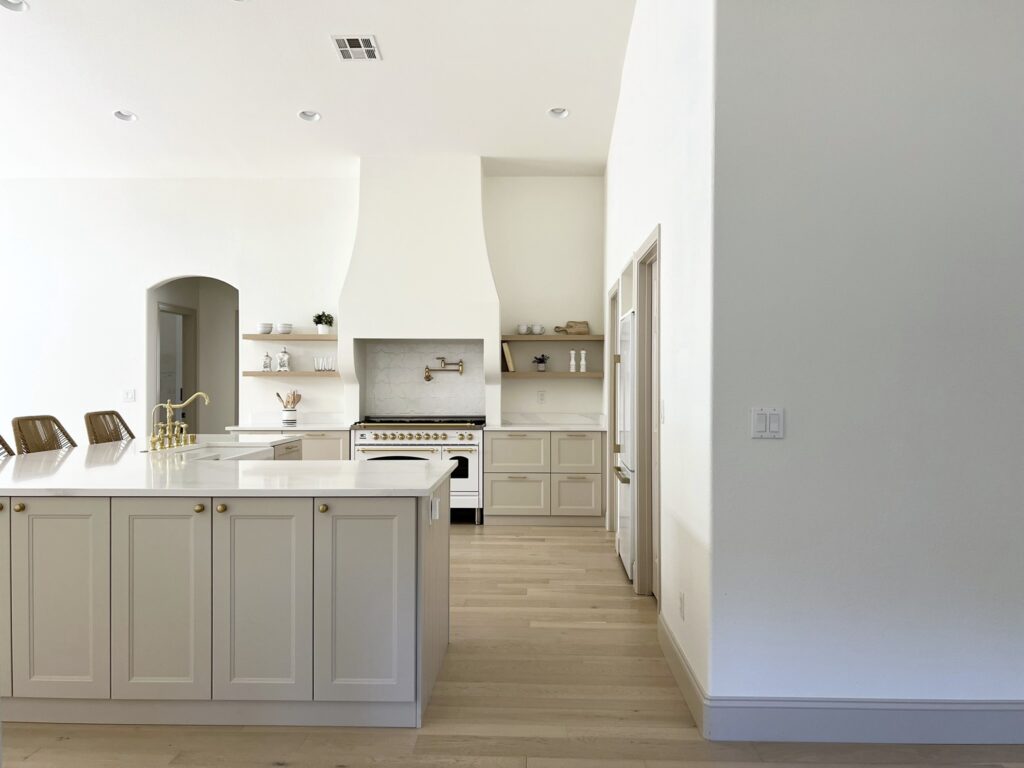
- Less storage overall: Upper cabinets can hold a LOT of stuff, including things that aren’t pretty. Open shelves typically hold less, and everything on them needs to earn its spot visually. You may need to find other places to store things like plastic containers, mismatched mugs, and random kitchen gadgets. This was one of the reasons why I added extra storage to our kitchen island when I decided to go with open shelving:
- Not great for every item: Things like cereal boxes or mismatched plastic food containers don’t look great sitting out. You’ll need to be selective about what goes on your open shelves versus what gets tucked away elsewhere.
How to Style Open Kitchen Shelves
If you’ve decided to go for it or you’re leaning that way, here are some styling tips that will make your shelves look intentional and beautiful.
- Stick to a color palette: This is the single biggest thing you can do. Choose two or three colors and stick to them. White dishes, wooden cutting boards, and green plants is a classic combo that always looks polished. Avoid having a rainbow of random colors competing for attention.
- Mix heights and shapes: Put taller items like pitchers or olive oil bottles next to shorter stacks of bowls or mugs. This creates visual interest and keeps things from looking flat and boring.
- Use the rule of three: Group items in odd numbers, especially threes. Three small potted herbs, a stack of three cookbooks, three matching jars. Odd numbers are naturally more pleasing to the eye.
- Leave breathing room: Don’t pack every inch of shelf space. Leaving some empty space between groups of items makes everything look more curated and less cluttered. Think of your open shelving like a store display, not a warehouse shelf.
- Add at least one organic element: A small plant, a wooden bowl, or a woven basket adds warmth and life. Without something natural, shelves can feel cold and sterile.
- Keep everyday items on the lowest shelves: Put the plates, bowls, and glasses you use daily within the easiest reach. Save the higher shelves for decorative items or things you use less often.
Best Materials for Open Kitchen Shelves
The material you choose matters more than you might think. Here are the most popular options.
- Solid wood: Walnut, oak, maple, and pine are all popular choices. Wood adds warmth and works in almost every kitchen style. Butcher block shelves are especially popular in farmhouse and rustic kitchens. Make sure to seal the wood to protect against moisture and stains.
- Reclaimed wood: If you love that rustic, lived-in look, reclaimed wood shelves have tons of character.
- Metal: Black metal or brass brackets with wood shelves are a go-to for industrial and modern kitchens. All-metal shelving works well in professional or minimalist-style kitchens.
- Marble or stone: For a high-end, luxury feel, marble or stone shelves are stunning. They’re heavier and more expensive, but they look stunning.
- Manmade materials that mimic natural materials: I used these budget-friendly floating shelves that look like white stained oak and they look amazing even close up:
The Hybrid Approach (Best of Both Worlds)
Here’s a secret that a lot of designers use. You don’t have to go all or nothing. The hybrid approach is where you replace some upper cabinets with open shelving and keep others closed.
For example, you might do open shelving on either side of your range hood or sink window, and keep closed cabinets in other areas. This gives you the airy, styled look of open shelves while still having closed storage for the less photogenic stuff.
This is the sweet spot for most people. You get the aesthetic without the headache of having zero hidden upper cabinet storage.
How to Keep Open Shelves Clean
Since dust and grease are the biggest downsides of open shelving, here are some practical tips to help you keep them clean and neat:
- Wipe down shelves and items at least once a week, especially near the stove
- Use a mixture of warm water and dish soap or a gentle all-purpose cleaner
- Displaying frequently used items like dinner plates on your shelves will help since those get used and washed regularly anyway
- Keep a tray under grouped items so you can easily move everything at once to wipe down the shelf
- Run your range hood vent every time you cook to minimize grease buildup in the air (I believe this is one of the main reasons our shelves stayed clean longer!)
Who Should Go For It and Who Should Skip It
Open shelving could be a great option for you if
- You enjoy keeping things organized and tidy
- You have a curated collection of dishware you love looking at
- Your kitchen is small and you want to open up the space visually
- You’re on a budget and want a big impact for less money
- You cook with your range hood on regularly
You might want to skip open shelves in your kitchen if
- You have a lot of kitchen items and need maximum storage
- You prefer a low-maintenance kitchen that doesn’t need constant tidying
- You do a lot of heavy cooking that creates grease and steam
- You live in a particularly dusty area
Would I Install Open Shelving During a Future Kitchen Remodel?
Yes! However, I would need to make sure that I still have enough closed storage in cabinets or a pantry. Functionality is huge for me at this point especially with our two little ones.
I have also started collecting dishware and would love a place to properly display what I already have and hope to collect in the future.
At this point, I think a hybrid of open shelving and some closed upper cabinets or an oversized pantry might work great for our family! We’re not quite ready for our big kitchen remodel yet though so stay tuned!
Should You Install Open Shelving?
This will really depend on your personal preference, I hope this post was helpful and showed you some of the things to consider.
If you’re on the fence, you can start small. Try replacing one section of upper cabinets or adding a single floating shelf in an empty spot. Live with it for a few weeks and see how it feels. You might just fall in love with it or find that it doesn’t work for you.
Keep in mind, the hybrid approach is always an option. You don’t have to commit to a fully open kitchen to enjoy the benefits of some open shelving.
As always, feel free to reach out with any questions!
Tina

Leave a Reply